 Naru News日本語
Why can an AI with no medical license choose medicine in Utah?
Only licensed people, like doctors, can prescribe medicine. That's the rule in Japan, and in America too.
But in October 2026, a trial began in the US state of Utah to choose acne creams for first-time patients. The one choosing is an AI, and of course, an AI holds no medical license.
And the medical licensing laws haven't changed. So why can an AI with no license choose medicine?
First guess
“Because a doctor checks it at the end?”
Half right. In the first stage, two doctors each independently check every cream the AI picks before it goes to a pharmacy, and on the record it counts as the overseeing doctor's prescription. But that supervision is reduced step by step, and in stage three, routine prescriptions are only spot-checked. So with the licensing law unchanged, why is an AI with no license allowed to choose?
Answer
Not because the medical licensing law changed, but because the state's Office of AI Policy signed a 12-month trial agreement with the company under the “regulatory sandbox” created by a 2024 law.
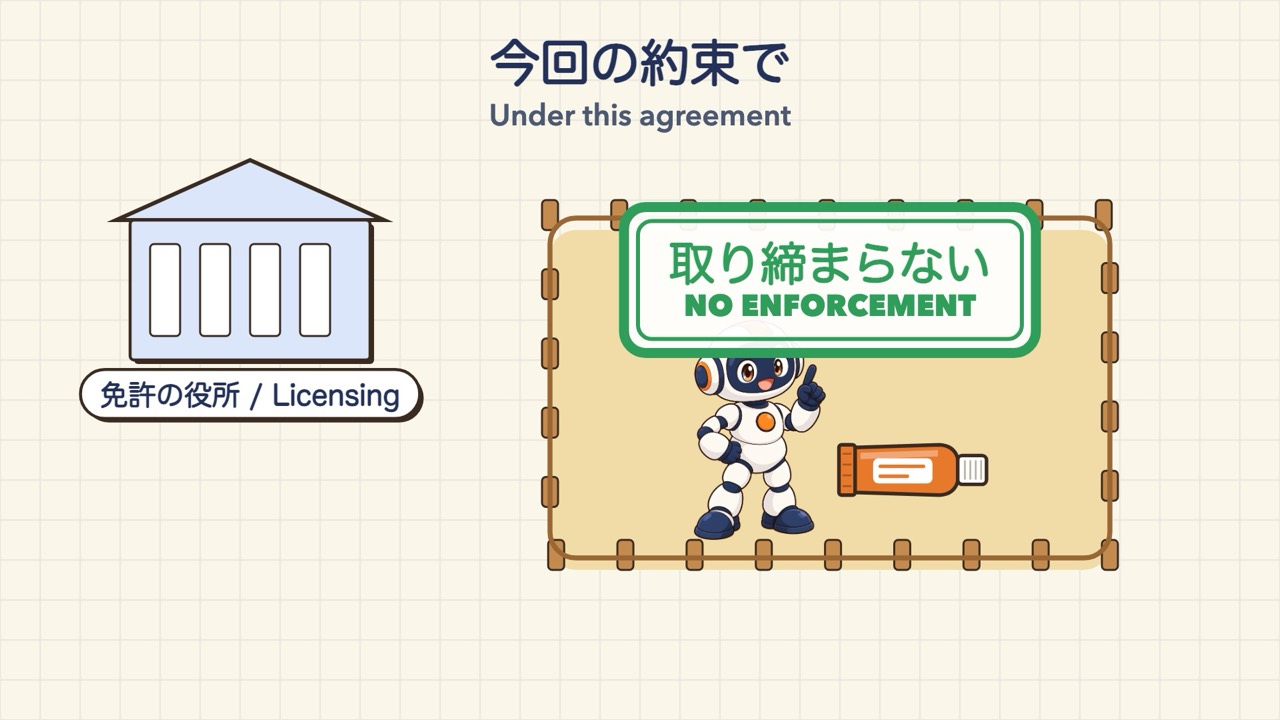
Under this agreement, the state licensing division won't treat it as practicing without a license, as long as it stays inside the fence: Utah adults aged 18 and over, and only creams from a short list approved in advance by doctors.
On top of that, doctors at first check every cream the AI picks before it goes to a pharmacy, and supervision is reduced in three stages, each step up requiring conditions to be met and the state's written approval.
Watch the video (8 min 23 sec)
Chapters (11)
Full transcript
0:00An AI with no license, choosing medicine?
NaruOnly licensed people, like doctors, can prescribe medicine.
NaruThat's the rule in Japan, and in America too.
NaruBut in October 2026, a trial began in the US state of Utah.
NaruThe one choosing acne medicine for first-time patients is...
Naruan AI.
NaruAnd of course, an AI holds no medical license.
ChiefNo license, and it's handing out medicine!?
ChiefDon't take sides. Just get me the facts!
NaruWhy can an AI with no license choose medicine? This lab takes no side, for or against. I'll just go find the facts!
NaruThe answer was in a single, time-limited agreement that the law allows.
NaruNaru News!
0:53How the app works
NaruFirst, what actually started. The app is called Nolla Derm, and it's open to Utah residents aged 18 and over.
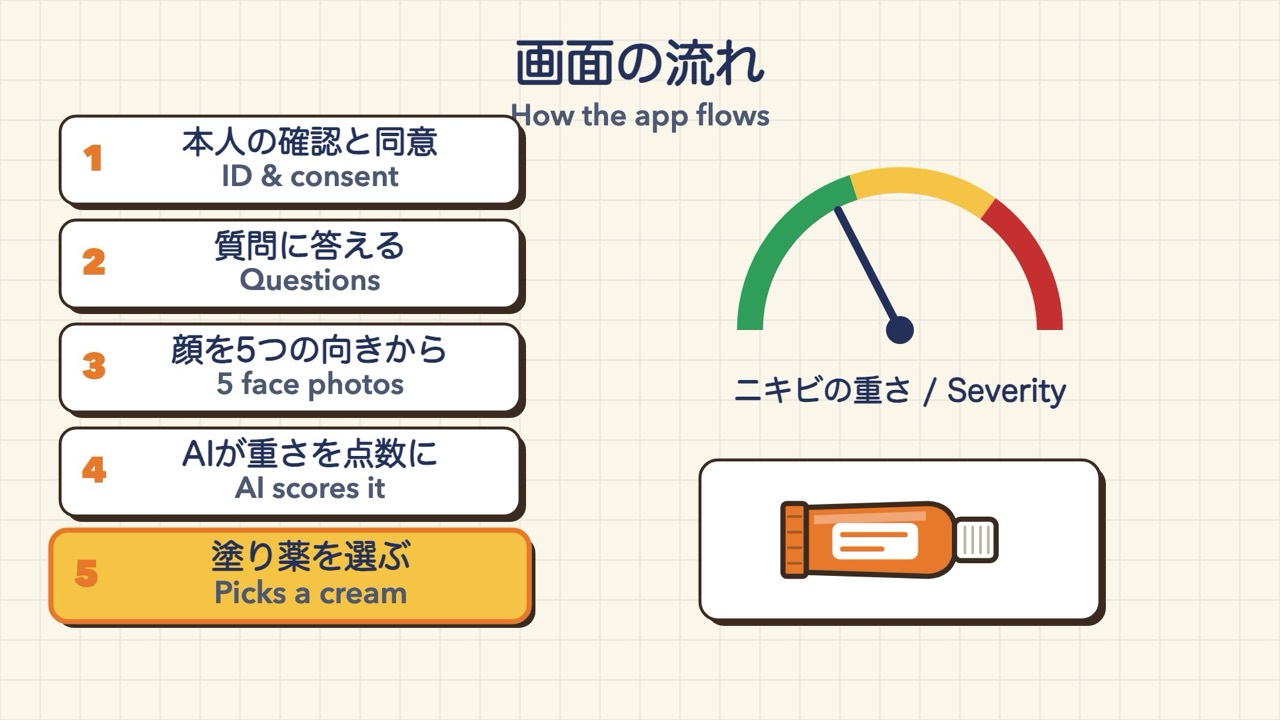
NaruHere's how it goes on screen. First, an identity check and consent. Then you answer questions.
NaruNext, photos of your face from five angles. The AI scores how bad the acne is, and picks a cream. The whole thing takes 10 to 15 minutes.
NaruIt can only choose from a short list of creams that doctors approved in advance. No pills.
NaruFor example, if the score says severe acne, the AI doesn't pick a cream. It hands the case to a doctor. And it can't even suggest a medicine that isn't on the list.
NaruThe company's doctor puts it this way: "The AI can't improvise."
1:44Rejected!
NaruI've got it! Utah rewrote its laws, so now an AI is allowed to prescribe!
ChiefRejected!
Naru...I checked again. The medical license laws haven't changed at all.
NaruIf the law hasn't changed, how can an AI with no license choose medicine?
2:05The regulatory sandbox
NaruThe key is another law Utah passed in 2024.
NaruThat law created a state Office of AI Policy, which can sign an agreement with each company that wants to test an AI.
NaruIt's called a regulatory sandbox.
NaruA sandbox is a play area. The idea is: inside the fence, you're allowed to try things.
2:31The law stays the same
NaruUnder this agreement, the state licensing division promised not to treat it as practicing without a license, as long as it stays inside the fence.
NaruThe fence is the range we just saw: Utah adults aged 18 and over, and only creams from the short list.
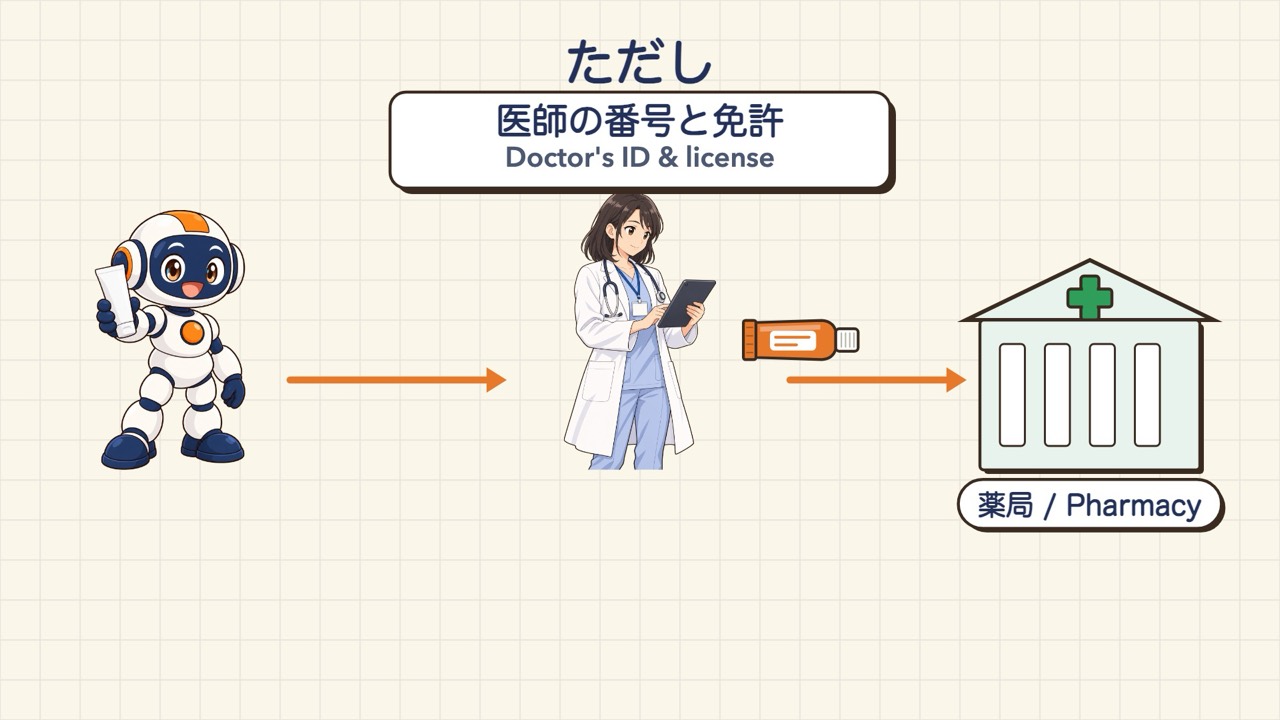
NaruEven so, every cream the AI picks goes to the pharmacy under the overseeing doctor's ID number and license, and on the record, it counts as that doctor's prescription. And the agreement doesn't take away the responsibility of the company or its doctors.
NaruThe licensing law stays the same. It just isn't enforced inside the fence. That's the first answer.
NaruThe agreement lasts 12 months, and the state can end it at any time. It doesn't mean the state endorses the app, either.
3:22Three stages of supervision
ChiefInside the fence, it's all left to the AI!?
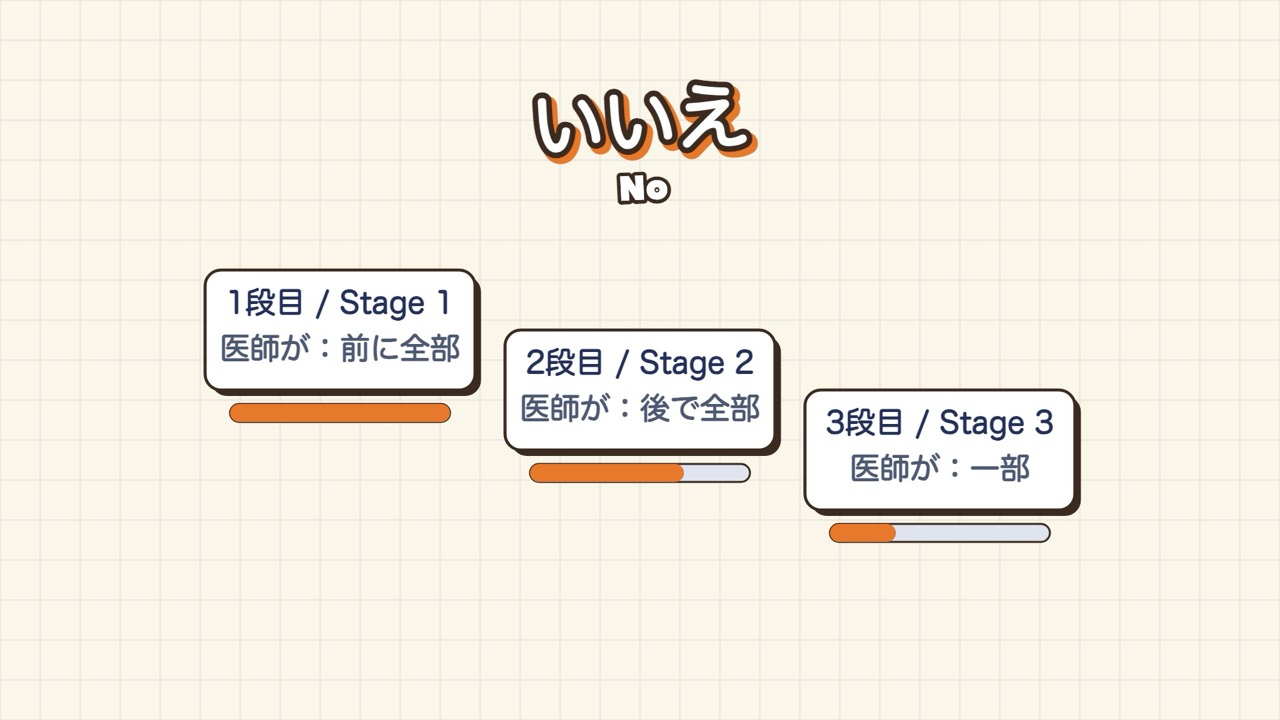
NaruNo. The rules reduce supervision step by step, in three stages.
NaruThink of it like learning to drive.
NaruStage one is the instructor sitting beside you with a foot on the brake. Before anything goes to a pharmacy, two doctors each independently check and approve every cream the AI picked.
NaruThat continues for at least four weeks, and at least 100 patients.
NaruStage two is driving alone, with every recording watched afterward. The AI prescribes first, and doctors review every case later.
NaruStage three is spot checks: they review a sample of the prescriptions.
NaruBut every close call still gets watched in full. Even in stage three, every case with a side effect, or one passed to a doctor, is fully reviewed.
4:17Quiz
NaruQuiz time!
NaruTo move up a stage, at least what percent of the AI's choices must match the doctors' judgment?
NaruA, 50 percent. B, 80 percent. C, 95 percent.
NaruThe answer is C: at least 95 percent.
4:42Conditions to move up, and to stop
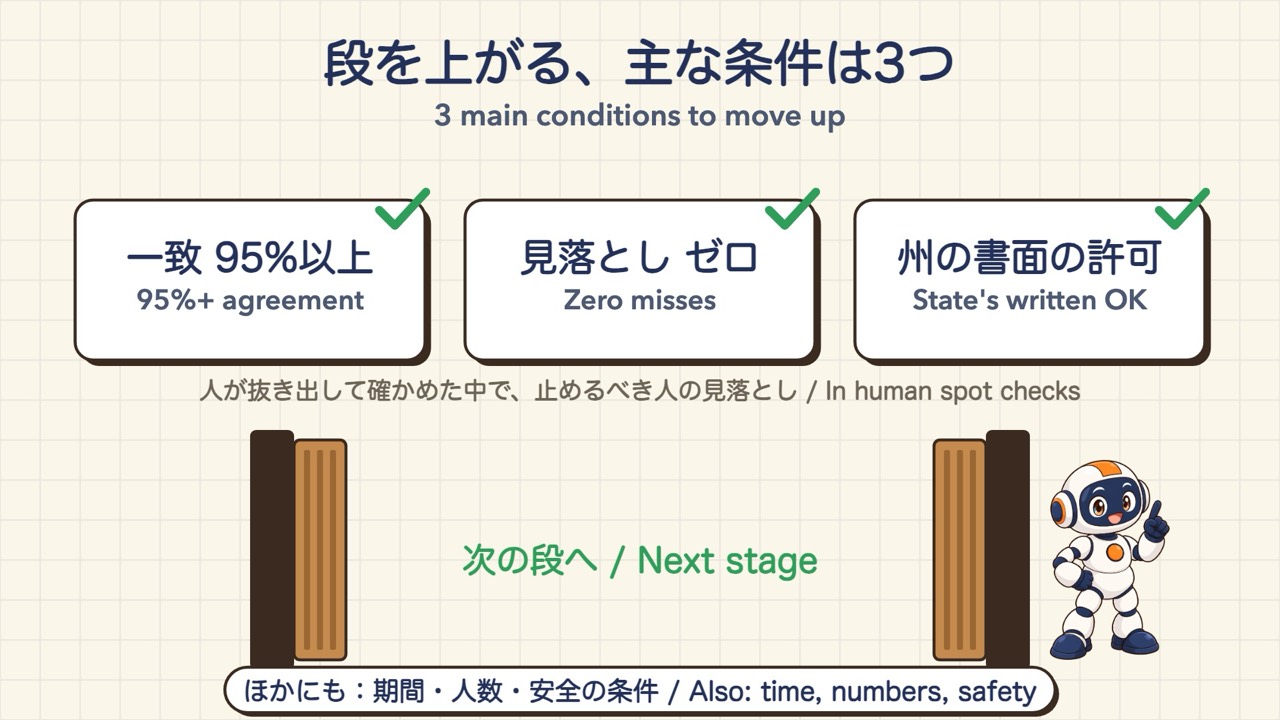
NaruThere are three main conditions to move up: at least 95 percent agreement with doctors, zero missed cases that should have been stopped in human spot checks, and the state's written approval.
NaruIt also has to meet other requirements, like a minimum time and number of patients, and safety conditions.
NaruCases that must be stopped include people who are pregnant or breastfeeding, under 18, or living outside Utah.
NaruIn those cases, the AI doesn't prescribe. It stops the process or passes the case to a doctor. If the spot checks find even one miss, it can't move up a stage.
NaruSeparately, there's also a rule for stopping. If even one serious adverse event is reported, the AI-run prescribing is paused right away for review.
NaruDraw tight limits, and reduce supervision one step at a time. That's the second answer.
5:44Why try it?
NaruThen why does the state go to such lengths to try this?
NaruAccording to the company, about 100,000 people in Utah have acne right now, and many of them have a hard time getting to a dermatologist.
NaruThe company also points to long waits for appointments, and to counties with no dermatologist.
NaruThat's all according to the company.
NaruThe head of the state's AI office calls it a significant step forward in using AI to make care easier to reach, while maintaining rigorous oversight and safety.
6:19Voices against
NaruOn the other hand, there are voices against it.
NaruIn fact, Utah already had another company's AI trial, announced in January 2026. That one lets an AI handle only refills of medicine a doctor had already prescribed.
NaruThe state's medical licensing board objected in writing, saying that for safety reasons, refills are a task reserved for properly licensed medical practitioners, and asked for the trial to be stopped.
NaruThe state didn't stop it.
NaruThe company behind this new trial says it met with that same board before launch, and built in its feedback.
NaruAccording to the company, in the app's most recent 1,000 treatments before this trial, clinicians agreed with the AI's treatment plan about 96 percent of the time. We couldn't find any published independent check of that number.
NaruA state that wants to reach people sooner, and voices worried about safety. Nobody knows yet how this trial will turn out.
7:25What we learned
NaruSo why can an AI with no license choose medicine?
NaruNot because the licensing law changed, but because of a 12-month trial agreement that the law allows. It draws a tight fence, and reduces doctors' supervision one step at a time.
NaruWhen you hear that AI has started doing something, check how far it goes, and who's checking, and when. Naruhodo!
Chief...Naruhodo. For or against, you start with the facts.
NaruThe Chief gave us top marks!
NaruWhat do you think about AI choosing medicine? Tell us in the comments.
NaruThis has been Naru News!
NaruIf you went "naruhodo!", please hit like and subscribe!
Explained in pictures
More details
What actually started?
In October 2026, a trial of the Nolla Derm app, made by the company Nolla Health, began in the US state of Utah. It's open to Utah residents aged 18 and over. The app costs from $4.99 a month (a discounted trial rate), and medicine is paid for separately.
After an identity check, consent, a questionnaire and photos of the face from five angles, the AI scores the acne and picks from a short list of creams that doctors approved in advance. Pills are not included. If the score says severe acne, the AI doesn't pick a cream and hands the case to a doctor. It can't even suggest a medicine that isn't on the list. The company's doctor puts it this way: “The AI can't improvise.”
What is a regulatory sandbox?
With a 2024 law (SB 149), Utah created a state Office of AI Policy, which can sign an agreement (a regulatory mitigation agreement) with each company that wants to test an AI. This system is called a regulatory sandbox. A sandbox is a play area: the idea is that inside the fence, you're allowed to try things.
Under this agreement, the state licensing division won't treat it as practicing without a license, as long as it stays within the agreed limits (Utah adults aged 18 and over, and only creams from the short list). The medical licensing laws stay the same.
Every cream the AI picks goes to the pharmacy under the overseeing doctor's ID number and license, and on the record, it counts as that doctor's prescription. The agreement doesn't take away the responsibility of the company or its doctors. It lasts 12 months, the state can end it at any time, and it is not a state endorsement.
How is supervision reduced?
There are three stages. In stage one (at least four weeks and at least 100 patients), two doctors each independently check and approve every cream the AI picked before it goes to a pharmacy. In stage two, the AI prescribes first, and doctors review every case afterward. In stage three, they review a sample of routine prescriptions. Even in stage three, every case with a side effect, or one passed to a doctor, is fully reviewed.
The three main conditions to move up a stage: at least 95 percent agreement with doctors' judgment, zero missed cases that should have been stopped in human spot checks, and the state's written approval. There are also other requirements, like a minimum time and number of patients, and safety conditions (as of October 22, 2026).
What are the rules for stopping?
Cases that must be stopped include people who are pregnant or breastfeeding, under 18, or living outside Utah. In those cases, the AI doesn't prescribe; it stops the process or passes the case to a doctor. If the spot checks find even one miss, it can't move up a stage.
Separately, if even one serious adverse event is reported, the AI-run prescribing is paused right away for review.
What does the state say, and what are the objections?
This page takes no side for or against AI choosing medicine. It only lays out the facts of what was decided. For treatment or medicine, please ask a doctor or pharmacist.
According to the company, about 100,000 people in Utah have acne right now, and many of them have a hard time getting to a dermatologist; the company points to long waits for appointments, and to counties with no dermatologist (all according to the company). The head of the state's AI office calls it a significant step forward in using AI to make care easier to reach, while maintaining rigorous oversight and safety.
On the other hand, Utah already had another company's AI trial, announced in January 2026. That one lets an AI handle only refills of medicine a doctor had already prescribed. The state's medical licensing board objected in writing, saying that for safety reasons, refills are a task reserved for properly licensed medical practitioners, and asked for the trial to be stopped; the state didn't stop it. The company behind this new trial says it met with that same board before launch, and built in its feedback.
How reliable are the AI's choices?
According to the company, in the app's most recent 1,000 treatments before this trial, clinicians agreed with the AI's treatment plan about 96 percent of the time. That is the company's own figure, and we couldn't find any published independent check of it. “First in the US” is also the company's claim.
A state that wants to reach people sooner, and voices worried about safety. Nobody knows yet how this trial will turn out.
 Takeaway
When you hear that AI has started doing something, check how far it goes, and who's checking, and when.
Sources and how we checked
- Utah Office of AI Policy: agreement with Nolla Health
- Utah Office of AI Policy: FAQ
- Nolla Health: pilot description
- Utah Business (Oct 6, 2026)
- Medical Economics (Oct 5, 2026)
- Newsweek (Oct 2026)
- Holland & Knight (Oct 13, 2026)
- Utah Code 13-72-401 (regulatory mitigation)
- AHCJ (Jan 2026)
AI wrote this page from the video script and the sources above. A different AI from the one that wrote the script checked it against the text of those sources (October 23, 2026). A person with a master’s degree in science and a Japanese high-school science teaching license also read and checked it before publishing. Numbers are as of that date. If anything was hard to follow, you spot a mistake, or there’s a question you’d like us to look into, please write to [email protected].