 Naru News日本語
Ginkgo's autumn yellow was hiding in green summer leaves. So where was the maple's red all summer?
In autumn, ginkgo trees turn yellow and maples turn red.
But the ginkgo's yellow isn't a new color born in autumn. It was inside the green summer leaves all along, just hidden by the green.
So where was the maple's red all summer?
First guess
“Just like the yellow, hiding inside the green summer leaf?”
Only partly right. There is a little red pigment in the green summer leaf, but most of it isn't there at all. So where does all that autumn red come from?

Answer
Most of a maple's red (anthocyanin) wasn't anywhere yet in summer; the leaf makes it new in autumn.
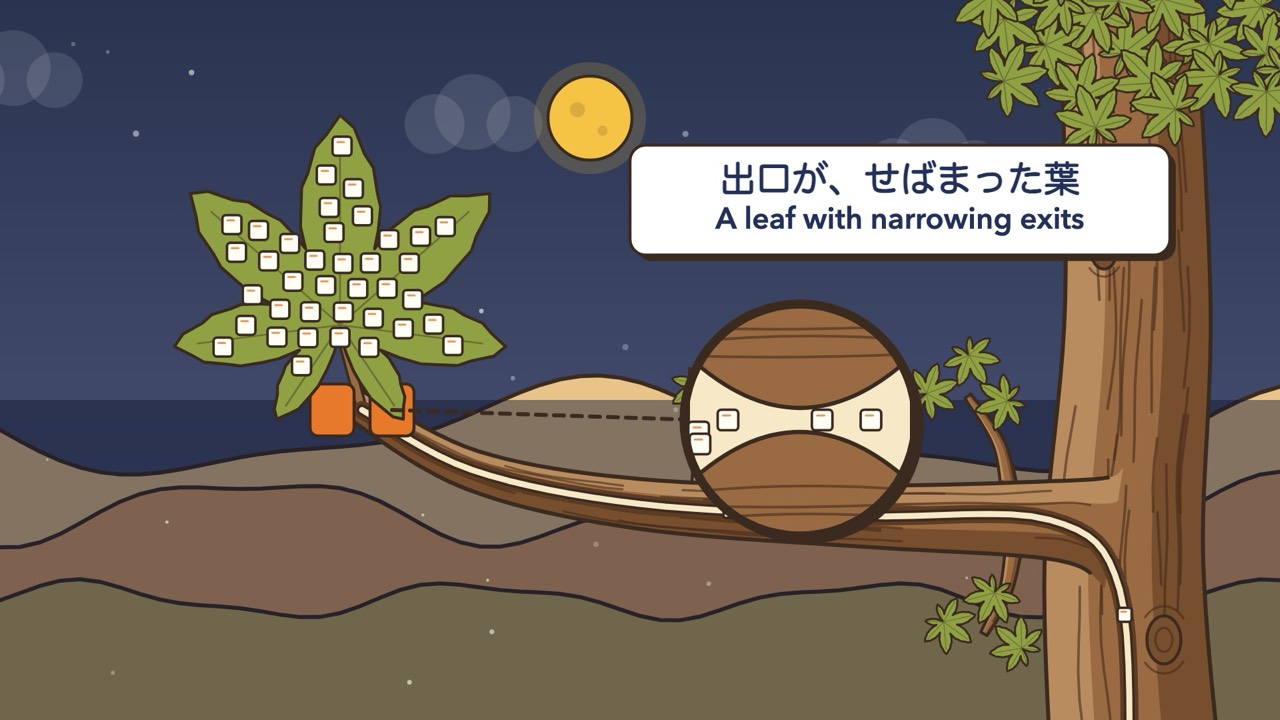
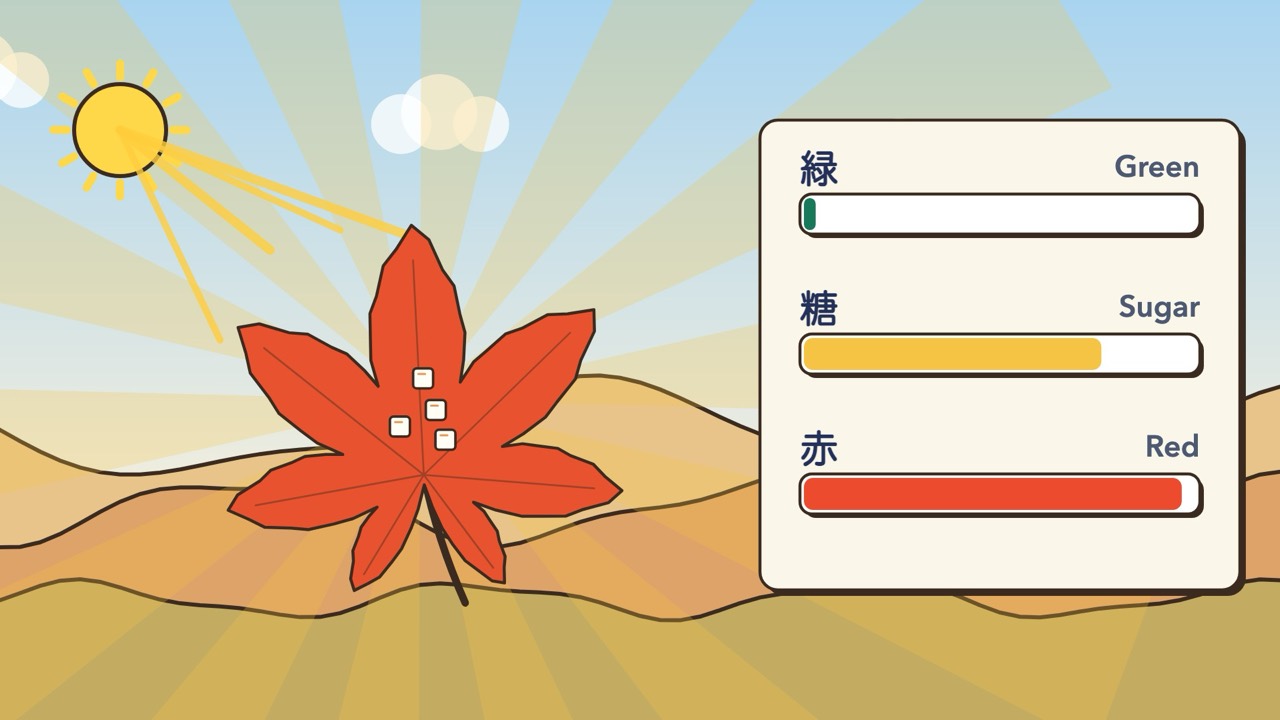
In autumn the veins carrying sap in and out of the leaf gradually narrow, so sugar made on sunny days can't easily flow out on cold nights, and that trapped sugar, plus sunlight, makes the red.
That's why plenty of sunlight helps a leaf make red, and why how bright the red gets changes a lot with each year's weather.
Watch the video (7 min 20 sec)
Chapters (15)
- 0:00Yellow was hiding in summer. So what about red?
- 0:46Yellow is the hidden color
- 1:22Was red hiding too?
- 1:36Checking the red pigment
- 2:07Apple farmers turn the fruit
- 2:28Quiz: what is red made from?
- 2:51How sugar builds up in the leaf
- 3:34Red changes with the weather
- 3:58Outer leaves and inner leaves
- 4:19Where was the red all summer?
- 4:38What is the red for?
- 4:57The parasol idea
- 5:50The signal idea
- 6:32Still not settled
- 6:52When you see the leaves this year
Full transcript
This video was made before we renamed things, so the Chief is called the “Director” in it.
0:00Yellow was hiding in summer. So what about red?
NaruAutumn. Ginkgo trees turn yellow. Maples turn red.
NaruBut that yellow isn't a new color born in autumn.
NaruIt was already there, inside the green summer leaves, all along. It was just hidden by the green.
NaruSo was the maple's red hiding in the summer leaves, too...?
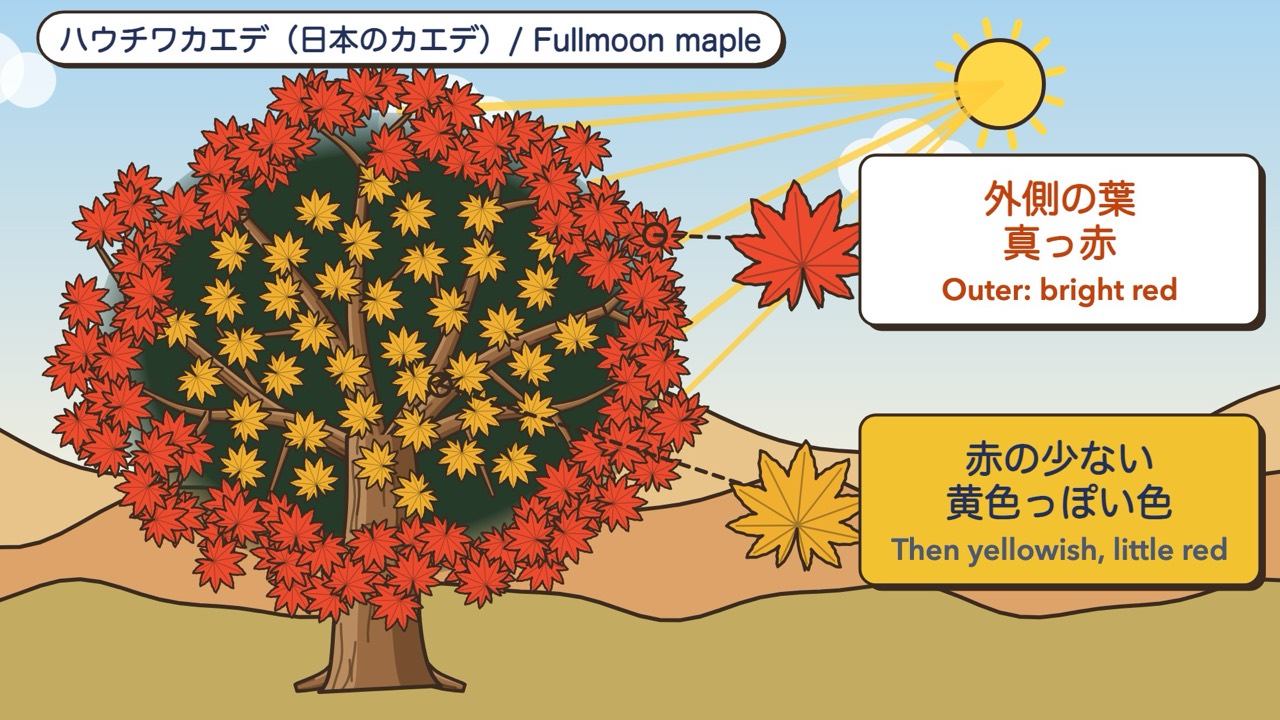
NaruBut look at a Japanese maple, the fullmoon maple. Its outer leaves, out in the sun, turn bright red.
NaruThe inner leaves end up a yellowish color with little red.
ChiefDifferent colors on the same tree!? Where was the red hiding? Go find out!
NaruThe clue was something apple farmers already knew.
NaruMarusuke's Naruhodo Lab!
0:46Yellow is the hidden color
NaruFirst, the yellow.
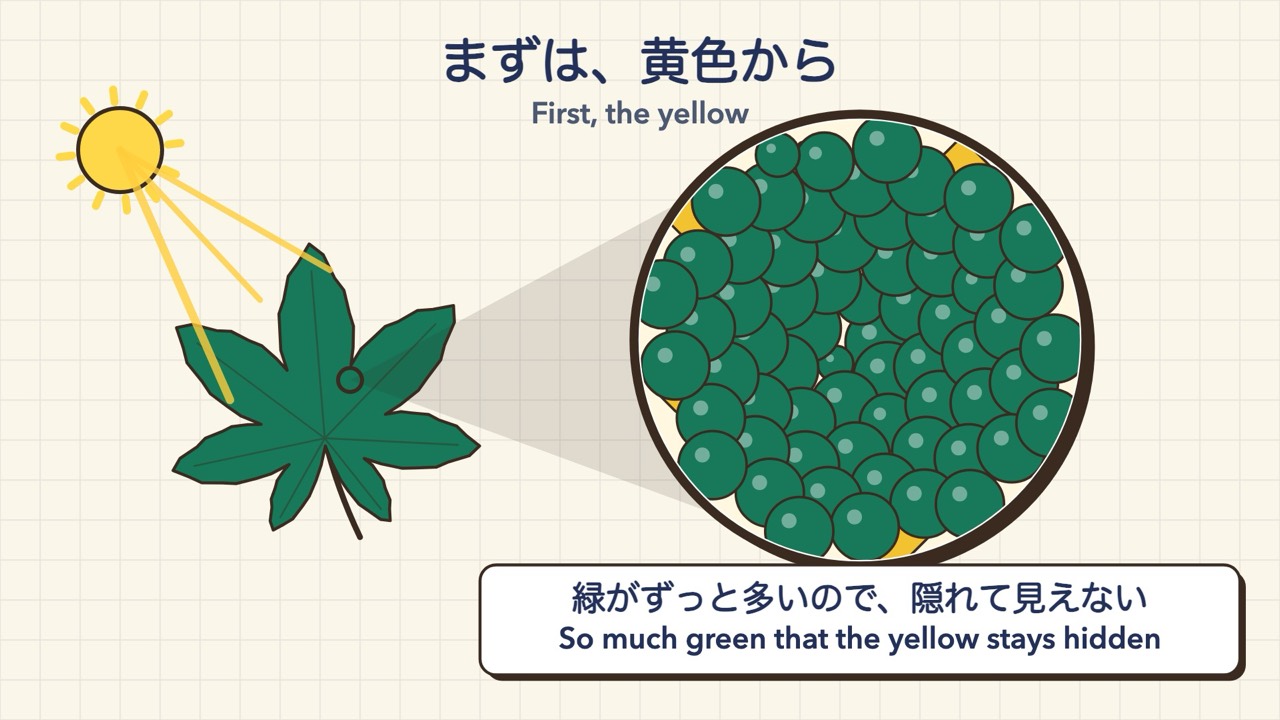
NaruThe green in a leaf is a pigment called chlorophyll. It catches sunlight and makes food. It's the star of the leaf.
NaruThe yellow pigments, carotenoids, are in the summer leaf too. But there's far more green, so the yellow stays hidden.
NaruIn autumn, as it gets colder, the green chlorophyll is broken down.
NaruAs the green fades, the yellow underneath shows through.
NaruIt's like peeling off green wallpaper and finding a yellow wall underneath.
1:22Was red hiding too?
NaruI've got it! The red was hiding under the green wallpaper, too!
ChiefRejected!
Naru...He says: was it hiding, or made in autumn? Check the pigments before you say that.
1:36Checking the red pigment
NaruAll right, let me check the red pigment. It's called anthocyanin.
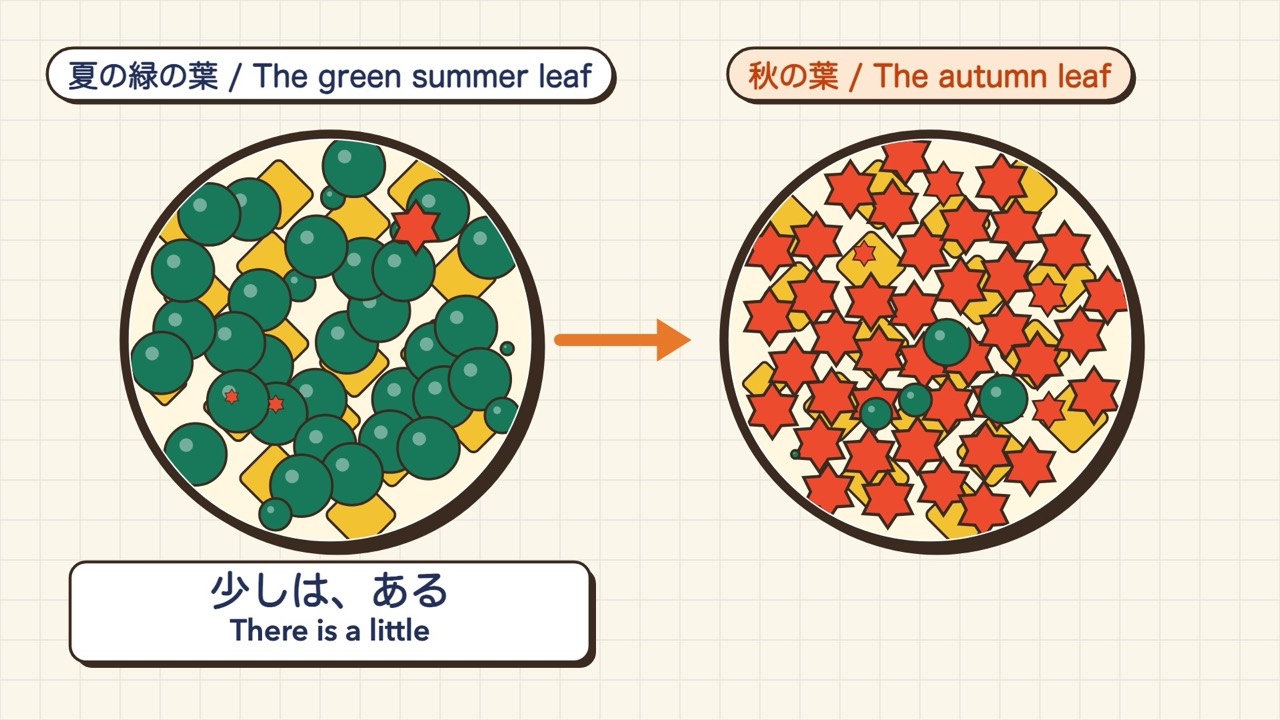
NaruAnd it turns out most of this red isn't in the green summer leaf at all.
NaruThere's a little. But most of it is a color the leaf makes brand new, in autumn.
NaruThere was almost no red wall under the wallpaper. In autumn, the leaf goes out of its way to paint itself red.
NaruAnd plenty of sunlight helps the leaf make this red.
2:07Apple farmers turn the fruit
NaruApple farmers know this well.
NaruThe red skin of an apple gets its color from anthocyanins, the same red pigments as the maple.
NaruIn autumn, farmers give each apple a twist, so the side that was in the shade gets sunlight too.
NaruThey call it turning the fruit, and it helps the color spread evenly all the way around.
2:28Quiz: what is red made from?
NaruQuiz time!
NaruWhat does the leaf make its red from? A: iron drawn up from the soil. B: sugar the leaf made from sunlight. C: the broken-down green pigment.
NaruThe answer is B: sugar.
2:51How sugar builds up in the leaf
NaruIn the daytime, the leaf uses sunlight to make sugar, its sweet food. Normally it flows out through the veins, down into the branches and trunk.
NaruBut come autumn, the veins that carry sap in and out of the leaf gradually narrow.
NaruSugar made on a sunny day can't easily flow out on a cold night.
NaruInside the leaf, with its exits narrowing, the sugar piles up.
NaruLet's watch it happen in a single leaf.
NaruThe green fades. The sugar builds up. Sunlight pours in. And the red grows.
NaruUsing the stored sugar, bathed in sunlight, the leaf makes red. That's what the maple's red really is.
3:34Red changes with the weather
NaruSo an autumn with sunny days and cold nights, one after another, brings out the brightest reds.
NaruBut if a severe frost kills the leaves, no red gets made. They turn brown and drop early.
NaruYellow is already in the leaf, so it's fairly steady from year to year. But how bright the red gets changes a lot with each year's weather.
3:58Outer leaves and inner leaves
NaruNow, back to that fullmoon maple from the start.
NaruThe outer leaves, soaked in sunlight, could make plenty of red.
NaruThe inner leaves, which get less light, make only a little red. So the yellow underneath shows through, and they look yellowish.
4:19Where was the red all summer?
NaruSo where was the maple's red all summer?
NaruFor the most part, it wasn't anywhere yet.
NaruThe leaf made it fresh in autumn, from sunlight and the sugar trapped inside.
NaruYellow is the color that was hiding. Red is the color made in autumn. Naruhodo!
4:38What is the red for?
NaruBut wait a moment.
ChiefPainting leaves you're about to throw away!? What a waste!
NaruExactly. What the leaf makes the red for is actually still not settled.
NaruThere are two leading ideas. To protect the leaf. Or to keep insects away.
4:57The parasol idea
NaruIdea one: the parasol.
NaruWhen strong light hits a weakened leaf that's losing its green, the leaf's cells can be damaged.
NaruThe idea is that the red softens the light like a parasol, and protects the leaf.
NaruBefore dropping a leaf, the tree pulls precious nutrients like nitrogen back into its branches and trunk. While the leaf is protected, it has time to finish that move.
NaruIn an American experiment, researchers put mutant plants that can't make red side by side with normal ones, under harsh conditions: strong light and cold.
NaruThe leaves of the plants that couldn't make red were damaged and dropped while still green. They also pulled back less nitrogen.
NaruBut other studies haven't clearly confirmed that red helps pull nutrients back.
5:50The signal idea
NaruIdea two: a signal to insects.
NaruAphids come to trees in autumn to lay their eggs. The idea is that red tells them: this tree is tough, there's nothing good for you here.
NaruAnd here, apples show up again.
NaruIn one study, aphids avoided apple trees whose leaves turn red in autumn. In a separate spring test, aphids placed on trees with red autumn leaves did worse. The trees really were tough.
NaruBut there's pushback. Avoiding red leaves doesn't prove red is a signal. Red leaves may simply be hard for insects to notice.
6:32Still not settled
NaruParasol or signal? Each has studies for it, and doubts against it. Why leaves turn red is still being worked out.
Chief...Naruhodo. Parasol or signal... When it's settled, let me know right away.
NaruThe Director gave me his maple-leaf stamp of approval!
6:52When you see the leaves this year
NaruWhen you see the autumn leaves this year, compare the leaves on the sunny side and the shady side of the same tree.
NaruWhere are the reddest autumn leaves near you? Tell us in the comments.
NaruThis has been Marusuke's Naruhodo Lab!
NaruIf you went 'naruhodo!', please hit like and subscribe!
Explained in pictures
More details
What are the green and yellow in a leaf?
The green is a pigment called chlorophyll. It catches sunlight and makes food. It's the star of the leaf.
The yellow comes from pigments called carotenoids. They are in the leaf all year, but in summer there's far more green, so they stay hidden.
As it gets colder in autumn, chlorophyll is broken down and the yellow underneath shows through. It's like peeling off green wallpaper and finding a yellow wall underneath.
Is there really no red pigment in the summer leaf?
The red pigments are anthocyanins. It turns out there's a little in the green summer leaf, but most of it is made brand new by the leaf in autumn.
Different colors on the same tree can't tell you on their own whether the red was there in summer. You have to check the pigment.
Plenty of sunlight helps the leaf make this red, and it is made from sugar the leaf produced in sunlight.
Why does the red get brighter in some years than in others?
An autumn with sunny days and cold nights, one after another, brings out the brightest reds. But if a severe frost kills the leaves, no red gets made. They turn brown and drop early.
Yellow is already in the leaf, so it's fairly steady from year to year. But how bright the red gets changes a lot with each year's weather.
Why do apple farmers turn the fruit?
The red skin of an apple gets its color from anthocyanins too, the same kind of pigment as the maple's red.
In autumn, farmers in Japan turn each apple so the side that was in the shade gets sunlight too. It helps the color spread evenly all the way around.
Why make red in leaves that are about to drop?
That is actually still not settled. There are two leading ideas: the parasol idea, to protect the leaf, and the signal idea, to keep insects away.
Each has studies for it and doubts against it, and why leaves turn red is still being worked out (as of 2026).
What is the parasol idea?
When strong light hits a weakened leaf that's losing its green, the leaf's cells can be damaged. The idea is that the red softens the light like a parasol and protects the leaf.
Before dropping a leaf, the tree pulls precious nutrients like nitrogen back into its branches and trunk. While the leaf is protected, it has time to finish that move.
In an American experiment, researchers put mutant plants that can't make red alongside normal ones under harsh conditions: strong light and cold. The leaves of the plants that couldn't make red were damaged and dropped while still green, and they pulled back less nitrogen. But other studies haven't clearly confirmed that red helps pull nutrients back.
What is the signal idea?
Aphids come to trees in autumn to lay their eggs. The idea is that red tells them: this tree is tough, there's nothing good for you here.
In an apple study, aphids avoided trees whose leaves turn red in autumn. In a separate spring test, aphids placed on trees with red autumn leaves did worse.
But there's pushback. Avoiding red leaves doesn't prove red is a signal. Red leaves may simply be hard for insects to notice.
 Takeaway
Yellow is the color that was hiding. Red is the color made in autumn. This year, compare the leaves on the sunny side and the shady side of the same tree.
Sources and how we checked
- University of Tokyo, UTokyo FOCUS (Yumiko Higuchi, Sep 27, 2022)
- Wisconsin DNR, Fall colors
- Kitao et al. (2022), Frontiers in Plant Science (fullmoon maple)
- Japan Ministry of Agriculture, aff Oct 2018 (turning apples)
- Japan Ministry of Agriculture, aff Oct 2021 (apple skin pigment)
- Hoch et al. (2003), Plant Physiology (parasol experiment)
- Hamilton and Brown (2001), Proc. R. Soc. B (signal idea)
- Archetti (2009), Proc. R. Soc. B (apples and aphids)
- Chittka and Döring (2007), PLoS Biology (critique of the signal idea)
- Wikipedia, Autumn leaf color / Anthocyanin
AI wrote this page from the video script and the sources above. A different AI from the one that wrote the script checked it against the text of those sources (November 2, 2026). A person with a master’s degree in science and a Japanese high-school science teaching license also read and checked it before publishing. Numbers are as of that date. If anything was hard to follow, you spot a mistake, or there’s a question you’d like us to look into, please write to [email protected].